


In centuries past things considered virtuous today; reading, cycling, listening to radio or playing chess were deemed by some as unhealthy, corrupting vices or a silly waste of time.
This begs the question: if today’s analog age virtues were once seen as sins of modernity, are some resolutions set today inversions of those set in the past?
Judging by some of the dialog around them, it is a reasonable assumption:
DON’T READ IN BED
Reading in bed was once considered as degenerate and sleep sapping as bed bound smartphone scrolling, as books became abundant and affordable, they stopped being a status symbol and became a symbol of decadence…

In the late 19th and early 20th century newspapers and medical authorities would sound warnings about the practice having a negative impact on your eyes and sleep patterns…“Why do people talk about being ‘guilty’ of reading in bed?” asked the London Spectator in 1903, noting that medical authorities were sounding warnings - many of which it noted were quoted by ‘The Daily Mail’ (yes that one)

In 1908 the concerns were given renewed legitimacy when medical journal ‘The Lancet’ weighed in on the matter, repeating a warning it first made in 1888, even going so far as suggest 18+ age limit on the practice to protect eyes.


In 1950 the American Medical Association magazine warned not to read, as part of its rules of getting good sleep. It is an unfounded notion the persists today, passed down the generations.
CYCLE LESS
The bicycle boom of the 1890s would garner disapproval from a number of groups… while some physicians argued cycling was healthy others linked it to insanity, deformities of the spine and even a cause for appendicitis.
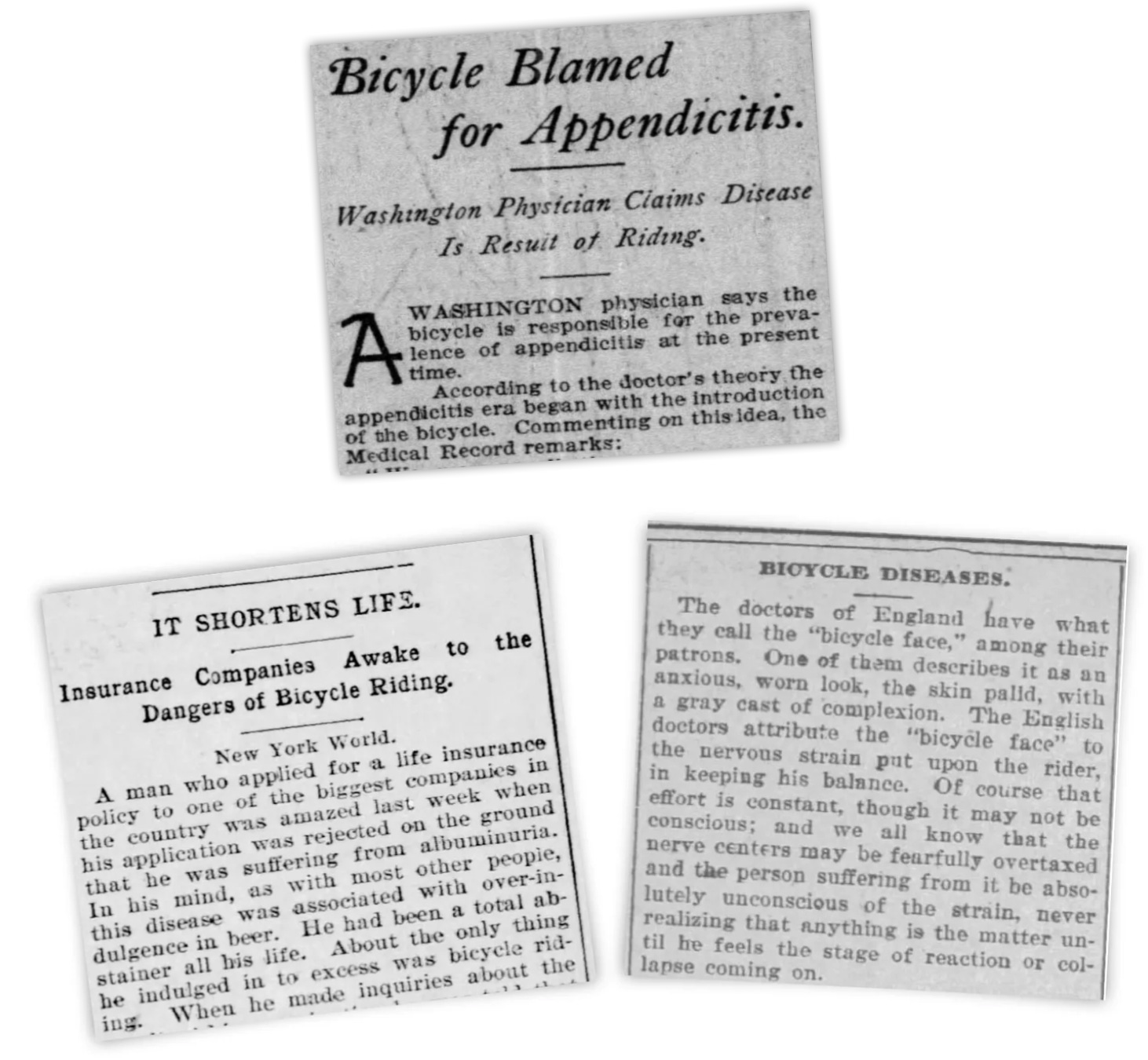
One insurance company even refused to insure bicycle riders, while one army recruitment office rejected applicants who were avid cyclists because it was assumed they had a weakened ‘bicycle heart.’

REDUCE RADIO TIME
The rise of Radio in society was inevitably followed by handwringing and speculation about its possible downsides: dead birds, poor grades and sleep deprivation were just some of the unfounded concerns.

In 1938 it was dubiously blamed of mass panic after a War of the Words broadcast, a notion perpetuated by newspapers who felt threatened by the new medium.
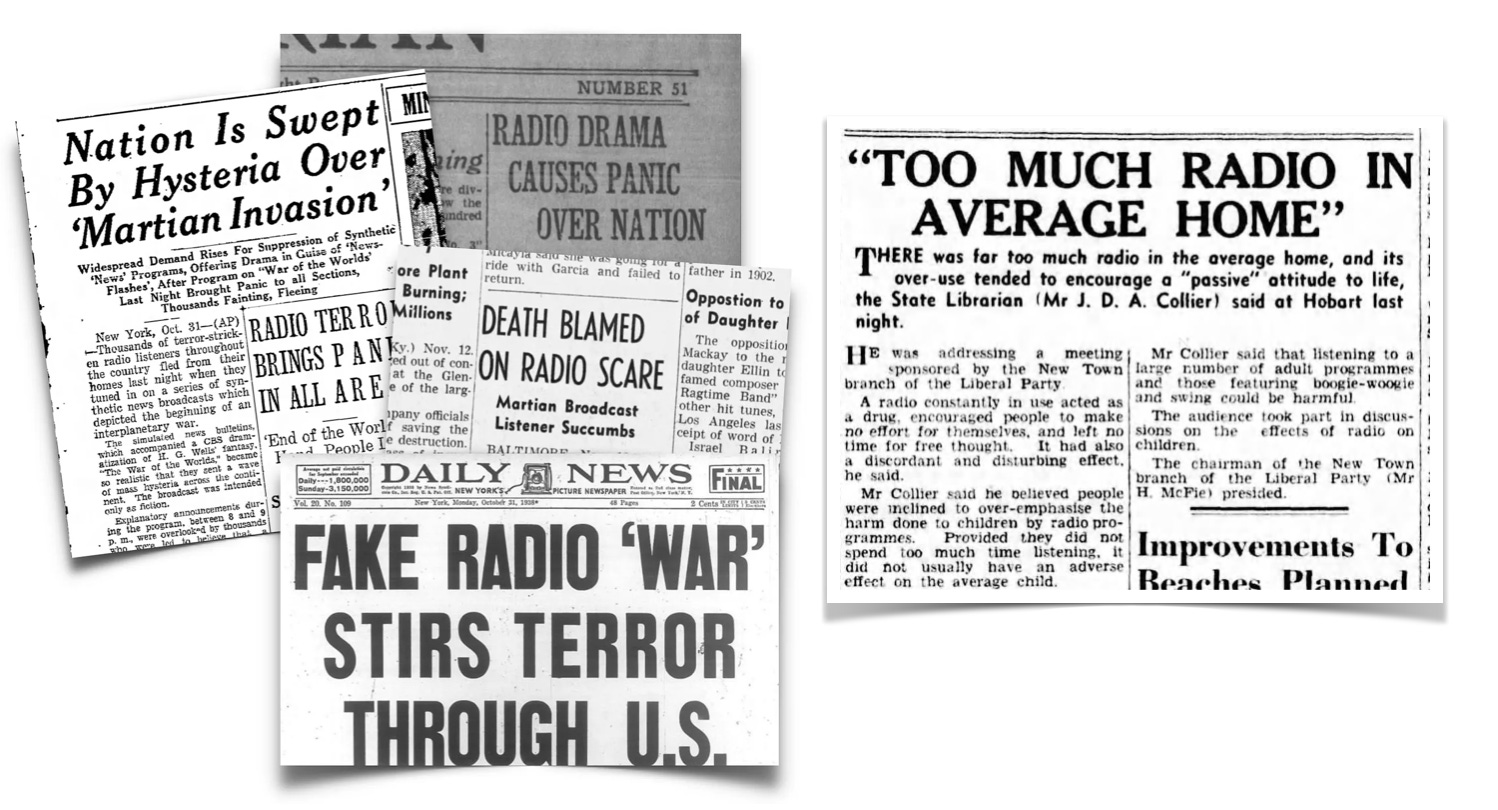
One preacher declared in 1943 that “Persons who listen to the radio from dawn to dusk suffer from the disease “radio perpetuum”, a slow but sure softening of the brain” - what we today call ‘brainrot.’
GIVE UP CHESS
In 1858 Paul Morphy became widely considered the world Chess champion, as a result national interest in the game boomed, leading to Scientific American weighing in on the matter opining: “Chess is a mere amusement of a very inferior character, which robs the mind of valuable time”
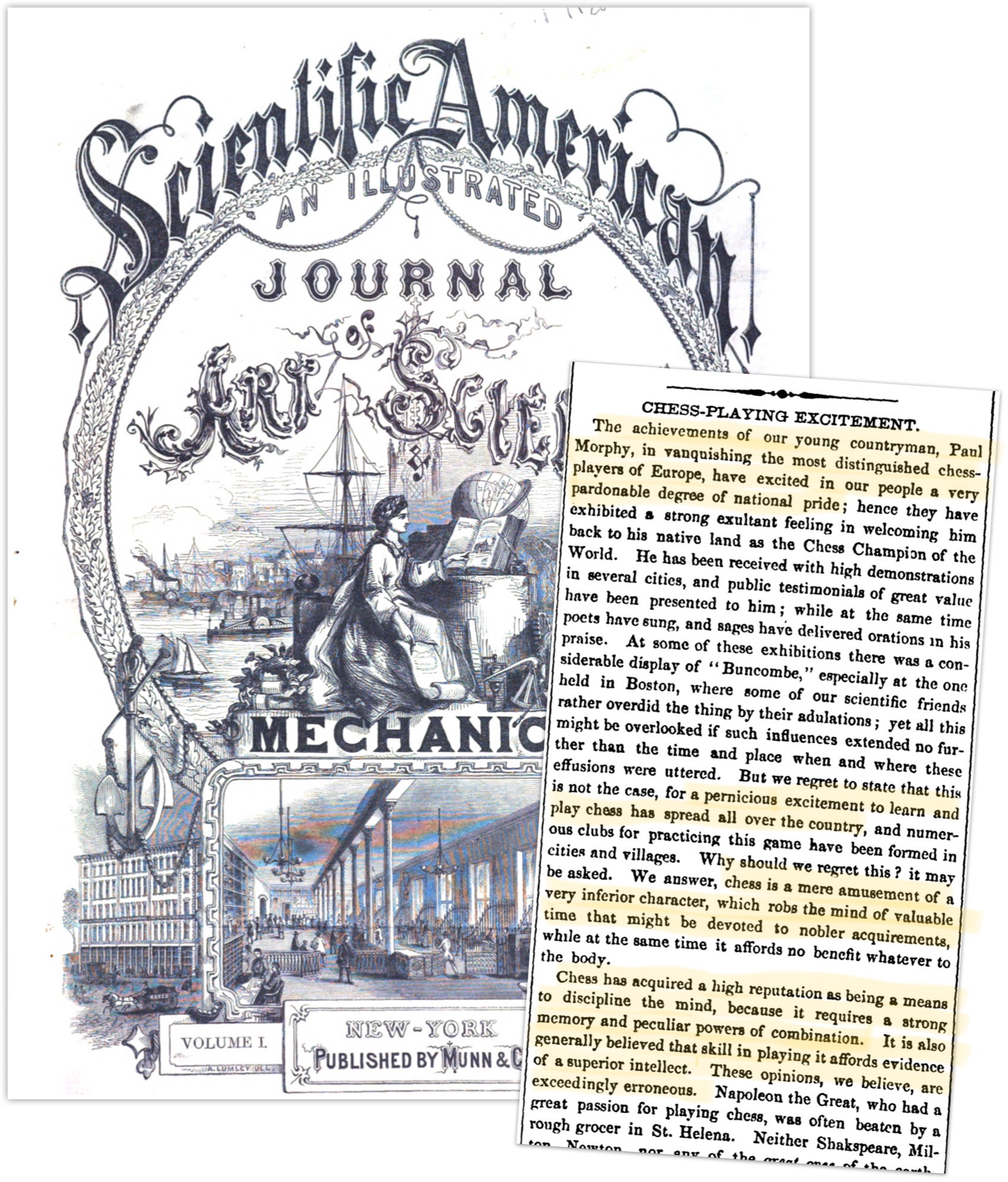
Paul Morphy’s mental health would rapidly decline in the proceeding years, Chess was blamed by some for the deterioration, when other champions met similar fates there was speculation Chess might have a negative impact on players more generally.
CUT DOWN ON CROSSWORDS
Today word games are widely considered good for our brains, crosswords have survived the transition from print to digital and new word games continue the emerge - like Wordle.

The omnipresence of crosswords in the U.S. was described in detail in a British article that reported the “fad” was “in trains and trams on omnibuses, in subways, in private offices and counting rooms, in factories and homes, and even — though as yet rarely — with hymnals for camouflage, in church.” Along with other modern trends, the crossword had supposedly “dealt the final blow to the art of conversations.”

Ironically The New York Times - now famous for its crossword puzzle - would refuse to publish the games for many years, deeming them unworthy of a serious publication. Why? Because they were considered unintellectual and associated with distraction, earning bans by at least one professor and a judge.
Happy New Year
Every generation believes it has finally identified the real vices - the habits that must be curtailed for health, morality, or progress. History suggests caution.
As the new year begins, it’s worth asking whether some resolutions we set today will look as strange in hindsight as vows to read less, cycle less, or stop playing chess. After all, yesterday’s degeneracy has a habit of becoming tomorrow’s virtue. Choose wisely.
Brilliant. Reading a biography of the Wright Brothers this week and came across this, reference
bikes in the 1890s…
“Voices were raised in protest. Bicycles were proclaimed morally hazardous. Until now children and youth were unable to stray very far from home on foot. Now, one magazine warned, fifteen minutes could put them miles away. Because of bicycles, it was said, young people were not spending the time they should with books, and more seriously that suburban and country tours on bicycles were “not infrequently accompanied by seductions.””
Trust the science! Believe what the newspapers write! Listen to the talking head on TV!
Of course, if you want to live a long, happy life, get a dog, go out to walk in the woods, watch the flowers grow and ban all of the above.